Can fast-moving AI wait for international IP treaties? Highlights from the public lecture by WIPO Director General, Daren Tang
Everyone who is active in international IP law, policy and/or practice knows that IP treaty-making is a notoriously lengthy process. From waiting for consensus among Member States to waiting for Member States who adopted a treaty to follow through by not just ratification or accession but domestication of the treaty into local law. For example, the WIPO Treaty on Intellectual Property, Genetic Resources and Associated Traditional Knowledge took 25 years from conceptualisation to adoption and the treaty will come into force three months after 15 eligible parties (countries or intergovernmental organizations, as stipulated in the Treaty) have either ratified or acceded to the Treaty [Only 4 countries have ratified or acceded so far].
The lengthy process of treaty-making is not the only consideration; contractual arrangements and litigation or other dispute resolution mechanisms also have their place particularly in determining how IP laws affect people’s lived realities. The former was, for example, a key issue in the context of the Kokoma case in Uganda, where the estate of the national anthem’s composer litigated over contractual service terms and statutory public domain rules to determine the family’s entitlement to ongoing royalties. Similarly, in South Africa’s TAC v GlaxoSmithKline dispute, private contract settlements and domestic competition law were leveraged using the flexibilities of the WTO TRIPs Agreement to force generic licensing for antiretroviral drugs, directly impacting public health access long before any international treaty was renegotiated. Likewise, the regulatory clash between Nigeria’s music CMOs (COSON and MCSN) and the ruling in Kenya’s Mercy Kingoo case which struck down statutory restrictions on how musicians contractually collect royalties, show how judicial enforcement of private contract rights often impact a creator’s livelihood far more directly than international norm-setting. 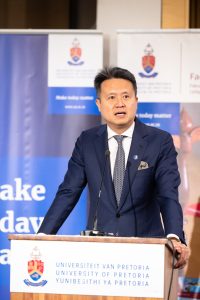
With the continued rise of developments in AI innovation across the world, how IP law, policy and practice will fare in addressing the challenges and opportunities presented by AI innovation remains an ongoing question. Across the world, regional bodies and individual countries are working hard to chart their way forward. The publication of National AI strategies and policy frameworks is on the rise and many of these documents explicitly address or at least reference AI-specific IP opportunities and challenges. For instance, the AU Continental AI Strategy highlights copyright risks surrounding generative AI training data and model outputs, while individual national frameworks like Egypt’s National AI Strategy emphasise IP modernisation as a catalyst for local innovation. Similarly, India’s #AIforAllStrategy identifies IP protection as vital for building a competitive research ecosystem, the EU’s Apply AI Strategy links IP compliance directly to the protection of cultural and creative industries and the US National AI R&D strategic plan prioritises balancing copyright protections with AI model development. The World Intellectual Property Organization (WIPO) has so far mainly navigated IP and AI questions through its WIPO Conversation on IP and Frontier Technologies using that forum to provide an open and inclusive platform to explore a wide range of technologies and their implications for IP, bringing together a global community of nearly 20,000 participants to exchange views and identify emerging issues.
Public lecture by WIPO Director General Daren Tang: Catalysing African Innovation and Creativity through IP
Against the background illustrated above, a public lecture by the Director General of WIPO, Mr Daren Tang given at the University of Pretoria, South Africa on 7 September 2026, explores how IP law must innovate in its application, reform and application to address the AI innovation landscape. The lecture titled “Catalysing African Innovation and Creativity through IP” formed part of the Director General’s first visit to South Africa, and followed a closed-door engagement with the University’s senior leadership earlier in the day. 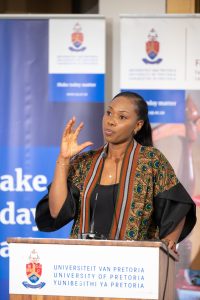
In his speech, Mr Daren Tang highlighted that according to data from WIPO, global IP applications are at their peak in recent years and trade in IP reached a record $1.3 trillion in 2024. But what is exciting and transformational, according to the Director General, is not just the volume of growth, but where growth is coming from. Almost 70% of all IP activity now comes from Asia, Africa and Latin America. He argued further that seizing the opportunities that are arising in economic growth and thriving innovation ecosystems requires a rethink of what IP means. In his view, this means that WIPO cannot operate on a business-as-usual mode, but must work with its member states to transform the global IP ecosystem. He shared 3 broad areas where WIPO and South Africa can work together to scale impact in transforming the global IP ecosystem:
First, by connecting IP much more closely to national priorities in education, agriculture, industry, investment, enterprise, culture, sports and heritage, while bringing IP’s benefits to the grassroots. This can be done by translating Africa’s highest levels of IP knowledge and awareness into tangible support for those innovating and creating; and changing the way WIPO delivers technical assistance. The latter involves moving to much longer-term projects where WIPO accompanies beneficiaries intensively for several months, seeking first to understand their aspirations and then bringing IP into their lives, helping to mentor them to incorporate practical IP skills into their life or business journey.
Secondly, through creating stronger pathways to connect research institutions with markets, industry and finance, ensuring that academic research transitions into real-world social impact. While initiatives such as WIPO’s Technology and Innovation Support Centres help researchers, students and entrepreneurs access scientific and technical information and navigate the IP landscape, building a thriving ecosystem requires direct linkages between finance, industry, and specialised intermediaries. These bridge-builders operating seamlessly across both academia and business, are essential to translating a breakthrough in a research lab into commercially viable solutions.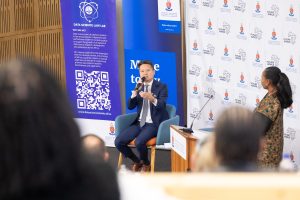
Third, progress is driven by providing a neutral, global and professional forum to discuss the impact of AI on the IP ecosystem. WIPO’s upcoming launch of Global Forum on IP and AI which will complement its expert-driven Artificial Intelligence Infrastructure Interchange (AIII) is a compelling example. More importantly, this must be an inclusive arena where African voices and African experts are active participants, ensuring that as AI reshapes global IP rules, African perspectives directly inform the outcomes. In this regard, the DG highlighted my work and that of the Data Science Law Lab, citing our Nwulite Obodo Open Data Licence (NOODL) and our IDRC-funded project on how IP frameworks can support responsible and inclusive AI innovation across Africa as prime models for inspiration.
On IP regulatory innovation; bridging evidence and policy
Beyond the immense pride of having our lab’s work recognised by the WIPO DG, it is worth noting that the 3 areas of collaborative work he highlighted in his speech centre on regulatory innovation – shifting from slow, traditional rule-making to flexible, adaptive policies that help new technologies grow safely – in the IP environment. The rapid pace of developments in AI innovation suggests that waiting around for global treaty-making will not cut it. On this, during my reflections and also at Q&A, I asked the DG this question: As we study the business models of African AI startups, identify the practical IP hurdles and opportunities in their creative processes, and gather ground-level insights, what pathways are in place to ensure this evidence directly informs policy change at WIPO?
In response, the DG highlighted two primary WIPO platforms designed to deep-dive into these issues: the AIII which is an expert-driven platform focusing on technical and structural frameworks and the Global Forum on IP and AI which is a policy-focused platform designed for member states, ambassadors, delegates and policymakers to debate governance from a member state perspective. Reassuringly, the DG promised to have both WIPO teams engage directly with the Data Science Law Lab and the University of Pretoria to integrate our research findings into these ongoing discussions.
The full lecture and the Q&A interaction with the WIPO DG is recorded and can be accessed here.