Presentation on equitable data licensing (NOODL License) at the Law Schools Global League Conference 2025
On 7th of July 2025, our Principal Investigator, Prof Chijioke Okorie, together with Dr Melissa Omino, Director of the Centre for Intellectual Property and Information Technology Law at Strathmore University, Kenya, presented their paper at the Law Schools Global League (LSGL) General Assembly and Academic Conference. The event was held at the University of Pretoria’s Hatfield campus, in the Plant Science Auditorium. Their presentation was part of a series of panel discussions that formed the academic program of the conference. The paper they presented is titled: Inequitable Openness in Licenses for Sharing African Data and Datasets: The Nwulite Obodo Open Data License (NOODL) Solution.
 The paper won the Law Schools Global League Research Award 2025!
The conference was attended by a host of esteemed guests, including deans, professors, and scholars from various universities across the world.
The session began with Dr. Melissa Omino providing background on the development of NOODL. She shared the example of the Maasai people, a well-known ethnic group primarily found in Kenya and Tanzania. Due to their distinct culture, expressed through their clothing, dance, and appearance, the Maasai have frequently been featured in global marketing campaigns. However, these communities have not benefited from the commercial use of their image and cultural knowledge. Their attempt to participate meaningfully in the data economy related to their own culture has largely been unsuccessful. This example set the stage for the discussion on Standard Public Open Licenses (SPOLs)—licenses with predefined terms that allow anyone to access, reuse, and redistribute licensable material without needing permission. While these licenses promote openness, Dr. Omino highlighted how they can inadvertently reinforce inequities. Key issues include: SPOLs often overlook existing power imbalances; datasets from under-resourced communities are frequently exploited by better-resourced global actors. The one-size-fits-all model assumes a homogenous global user base, which is far from reality.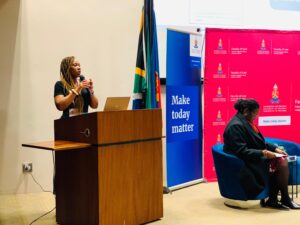
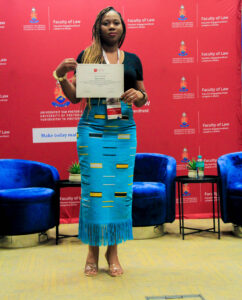
What makes the NOODL License different is how it builds in differentiation of dataset users in one licence document. The licence also offers a replicable model for other marginalised communities around the world.
Prof Okorie closed the presentation by sharing future directions for the broader Licensing African Datasets project which ‘houses’ the NOODL License. These include developing comprehensive resources and guidance for selecting and applying NOODL License, exploring practical strategies for ensuring compliance with NOODL terms, enhancing the understanding of the value African datasets hold and how this can influence negotiating power, and strengthening norms and expectations around ethical data sharing.
The paper which Prof Okorie and Dr. Omino presented on will be published in Issue 7(2) 2025 of the Law, Technology and Humans Journal later this July. Look out for it!
~Written by Yeukai Pedsiza