Perspectives from the Deep Learning Indaba 2024 #2: DSLL and empowering African voices
Some of the members of Data Science Law Lab were at the Deep Learning Indaba 2024 held in Dakar, Senegal in September 2024 and have shared their perspectives on various discussions at the Indaba. Sakina Shabani, a final year LLB student at the University of Pretoria was one of them.
Here’s what Sakina says:
The Data Science Law Lab workshop @DLI and empowering African voices
By Sakina Shabani
AI research & development, data governance, the emancipation of the rights of data subjects through cross-sector collaboration, mobilisation and the introduction of more flexible and tailored licensing frameworks that benefit the African continent can be said to be at an all-time high. In the last few years, we have witnessed the proliferation of grassroots AI companies and communities such as Lelapa AI and Ghana NLP who are focused on promoting and improving natural language processing in their respective national languages, but more so in the greater context of low-resource languages under which many, if not most, African languages fall.
As Chijioke Okorie (founder and leader of the Data Science Law Lab (DSLL) and Vukosi Marivate (UP-ABSA Chair of Data Science and Principal Investigator of the Data Science for Social Impact research group) aptly put it, it is indeed crucial that those who build AI systems afford greater consideration to the communities directly or indirectly contributing to the data that is used in commercial and non-commercial settings to develop AI technology and infrastructure on the African continent. According to them, even though openness in developing and deploying AI models provides transparency and an opportunity for shared learning, it also tends to conflict with privacy and proprietary rights.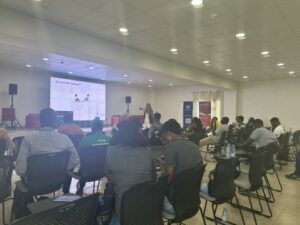
This then necessitates the development of more equitable and adaptable licensing frameworks that adequately address the questions surrounding the collection, distribution, compensation for, and protection of such data and the rights of the data subjects/labour force that helps produce these data sets. Data licensing frameworks must reflect the specific contexts and communities they serve. By doing so, they can help address Africa’s status as a “data desert” or “missing continent” in global data representation.
As a result, Nwulite Obodo Open Data License emerged as a response to the dilemma of open data licensing frameworks which did not fully cater to the needs or circumstances of the data subjects and the objectives of Africa-focused research outputs for the continent. Nwulite Obodo Open Data License does not intend to reinvent the wheel but simply modify it by allowing key role players to become valued stakeholders at their own table in the African data workflow, reaping the benefits of their inputs across the value chain. This framework which was developed under the auspices of Data Science Law Lab by Dr. Okorie in collaboration with Dr. Melissa Omino of the Centre for Intellectual Property and Information Technology, and researchers at the Data Science for Social Impact research group highlights the importance of seeing compensation for data work as more than just monetary remuneration. It invites one to view compensation as the exchange of value, an opportunity to barter and exchange expertise and resources to achieve equitable licensing arrangements which also simplify the regulation of agreements existing between multiple stakeholders in respect to one work or set of work.
That is why, showcasing the license at an annual event pioneering the evolution of Artificial Intelligence and Machine Learning for the strengthening of these disciplines in the African tech landscape, the Deep Learning Indaba becomes so necessary. This year’s conference held in the first week of September 2024 in Dakar, Senegal was themed, Xam Xamlé – a Wolof saying meaning, ‘to gain knowledge and share it’. At this year’s Indaba which I had the privilege to attend courtesy of funding support from the Gates Foundation through the Data Science for Social Impact research group, the Data Science Law Lab collaborated with others to host a workshop involving amongst other features, a panel discussion on “Ethical AI – Balancing Innovation and Data Rights in Africa”. Some of the key takeaways from the panel discussion included, the importance of obtaining prior informed, definitive, and wilful consent and how crucial it is to build up capacity through research, development, collaboration, and investment for a sustainable future.
It has been established that these kinds of strides cannot be made without transdisciplinary collaboration and buy-in, making the government an equally important piece of this puzzle. There is also significant progress being made in AI research across Africa. This means that more than ever before, it is important that donor organisations seeking to invest in and become a part of AI development and innovation in Africa, as well as organisations seeking to scale and compete on global levels, need not simply adopt technology that makes provision for the African user; technology which is simply transplanted from foreign contexts, but rather intentionally design and create technology which is expertly crafted to produce outputs that resonate with the needs of African users. Technology which avoids harmful biases, prejudice, exploitative practices or the infringement of dignity and autonomy. Discussions concerning these issues at the Deep Learning Indaba 2024 also included the expert voices of Chinasa Okolo, Leonida Mutuku, Ololade Shyllon and Vukosi Marivate. There were also insights from Lillian Wanzare, founder of KenCorpus on best practices for creating and managing data for African AI applications as well as hands-on activity on creating relevant relatable and responsible datasets resources for African AI.
What’s next? The developments witnessed in the AI and Machine Learning arena invite us to continue digging deeper into the meanings of concepts and constructs that shape this environment, becoming more aware of and familiar with the reality of the embedded nuances, morphologies, and origins that may intentionally or unintentionally be entrenched in this technology but which do not reflect the receivers’ backgrounds and ideologies. It is therefore crucial to be cognisant of these seemingly minute disparities and discrepancies that ultimately shape perception, reception, and propagation of such technologies to the detriment of their intended markets when developing, exporting, and designing such technologies without thorough consideration. Especially in African markets where such technologies appear to have left African players in a seeming disadvantage, there still exists opportunities within these frameworks that can be seized to produce more favourable and beneficial outcomes for African-focused use cases despite their historical backgrounds. If, and only if, they are particularly made for them, with them, and by them.