Perspectives from the Deep Learning Indaba 2024 #1: Digital drumbeats and Africa’s Rhythm in the AI Revolution
Some of the members of Data Science Law Lab were at the Deep Learning Indaba 2024 held in Dakar, Senegal in September 2024 and have shared their perspectives on various discussions at the Indaba. Benjamin Potgieter, a final year LLB student at the University of Pretoria was one of them.
Here’s what Benjamin says:
Digital drumbeats and Africa’s Rhythm in the AI Revolution
By Benjamin Potgieter
This September I had the honour of attending the Deep Learning Indaba 2024, which is a pivotal gathering of minds for shaping the future of AI in Africa. As the global AI landscape evolves at an accelerating pace our continent finds itself at a unique crossroads, facing both significant challenges and incredible opportunities in the realm of artificial intelligence.
“Xam Xamlé,” which translates to “To gain knowledge and share it” in Wolof, was the theme for this year’s Deep Learning Indaba in Dakar. The Indaba exemplifies this idea by creating a community devoted to education and co-operation, drawing inspiration from the lives and works of celebrated Senegalese novelist Mariama Bâ and historian Cheikh Anta Diop. By promoting ethical and community-focused methods, this year’s program aimed to advance African AI.
“Indaba,” is a Zulu word that translates to “gathering,” and I can personally attest to the fact that it truly was an indaba of Africa’s greatest minds. It is more than just a conference, Indaba prioritises consensus-building, cooperative decision-making and clear communication across various spheres such as law and computer science. It serves as a platform for exchanging ideas and discussing the multifaceted aspects of AI which has often been referred to as the fourth industrial revolution. The Indaba philosophy recognises that creating common ground requires not just talking, but also active listening to each other.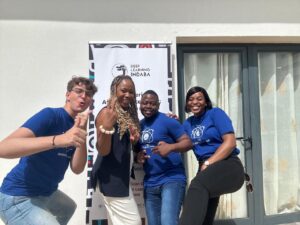
At its core, the Deep Learning Indaba aims to foster African engagement and contribution to AI and machine learning developments while promoting diversity in scientific domains. It’s a place where thought leaders from across Africa converge, united by the vision of building Africa by Africans.
The workshop co-organised by Data Science Law Lab at the Indaba focused on “Empowering African Voices in AI: Data, Models, and Innovation” which perfectly embodied the true spirit of the Indaba.
The promise of AI in Africa
While much of the world debates theoretical AI problems, Africa is not only partaking in their own debates but also charting a different course – one that harnesses AI’s potential to be able to address our continent’s most pressing issues. This practical solution-oriented approach is at the heartbeat of Africa’s AI revolution and it’s why initiatives like the Deep Learning Indaba are so crucial.
In Nigeria, AI-powered programs are already making tangible differences in education, food security and poverty. This is done through AI like Crop2Cash and Hello Tractor. These AI algorithms are empowering farmers to predict weather patterns, optimise crop yields, and manage resources more efficiently. These aren’t just technological showcases but they’re life-changing applications that directly impact African communities.
These pragmatic implementations of AI demonstrates Africa’s commitment to leveraging technology for real and measurable outcomes. The Indaba serves as a vital platform for sharing these success stories, fostering collaboration and ensuring that Africa’s AI development continues to prioritise tangible impact over abstract potential.
Data rights and ethical considerations
As we harness the practical potential of AI in Africa, we also have to navigate the complex ethical terrain of data collection and usage. This journey demands a uniquely African approach and one that respects our diverse cultural heritage while safeguarding individual rights. Indaba is the perfect opportunity to do this by getting perspectives from across Africa. After attending Indaba it has opened my eyes to a few things:
- First and foremost we need clear accessible data protection policies. These can’t be dense legal documents comprehensible only to experts. They should be written in plain language easily understood by all Africans, regardless of their background or mother tongue. This accessibility is not just about translation but it is about creating a shared understanding of data rights across our diverse continent.
- Secondly, the African context adds layers of complexity to the concept of consent in data collection. As an example, in many of our communities, elders play a significant role in decision-making. This traditional structure challenges the Western notion of individual consent. Our approach to data rights must therefore strike a delicate balance with respecting cultural norms while still protecting individual privacy. It’s not about choosing between tradition and modernity but it is about finding an African-oriented approach that honours both.
- Third and lastly, transparency is the cornerstone of this approach. We need to demystify data usage. We need to explain the purpose and application of collected information in simple terms and native languages. This openness builds trust which is a crucial element for the widespread adoption and acceptance of AI technologies in our communities.
Compensation and community benefits
As we advance AI development across Africa, we have to fundamentally reimagine our approach to compensation, particularly when it comes to data collection. The traditional model of purely monetary reimbursement falls short in capturing the true value of what communities contribute to the AI progress. We need a paradigm shift that aligns with African values and societal structures. This was deeply emphasised and discussed during Indaba 2024.
If you are reading this and thinking “so what?” consider this: when a community shares its data, it is not just providing information they are offering insights into their culture, practices and collective wisdom. How can we adequately compensate for such rich and contextual contributions which is not a liquidated amount? The answer lies in moving beyond transactional exchanges to fostering mutually beneficial partnerships.
Intellectual property considerations
Africa strides forward in AI development which is why protecting our innovations and data has become paramount especially in a digital environment. This isn’t just about safeguarding individual creations, it’s about preserving Africa’s collective intellectual wealth and ensuring that the benefits of our AI advancements flow back to our continent and its people. As a law student, these intellectual property considerations were especially interesting.
At the forefront of this critical mission is the ground-breaking work led by University of Pretoria’s Dr ChijiokeOkorie in collaboration with Strathmore University’s Dr Melissa Omino, and other esteemed experts across the continent. Their efforts to create an Africa-centric and alternative open data licensing framework showcased at Indaba 2024 represent a significant leap towards a unified approach to intellectual property and other data rights in the AI era.
Conclusion: The ubuntu Afri-tech triad
As we stand at the threshold of Africa’s AI revolution, it becomes clear that our path forward must be as unique as our continent itself. To this end, I propose we embrace the “Ubuntu Afri-tech Triad” a distinctly African reimagining of the triple helix model of innovation.
All the various spheres such as education, government and technology are all bound together by the Ubuntu philosophy “I am because we are” reminding us that our technological advancement must serve the collective good. This model isn’t just about keeping pace with global AI developments, it is also about building a unique African perspective. The future of AI in Africa is not a distant dream, it is a reality we are crafting with every decision, every innovation and every collaboration.
As the blogpost comes to an end, I can’t help but reflect on the profound privilege it was to attend Indaba 2024, if you enjoy all things AI, then Indaba is the space to watch. Being in the presence of such brilliant minds all united in their passion for advancing AI in Africa was truly humbling. The energy, the ideas and the spirit of collaboration I witnessed there have left an indelible mark on me.
The Deep Learning Indaba isn’t just a conference; it’s a catalyst for change, a beacon of hope for our continent’s technological future. Indaba is building Africa by Africa.